
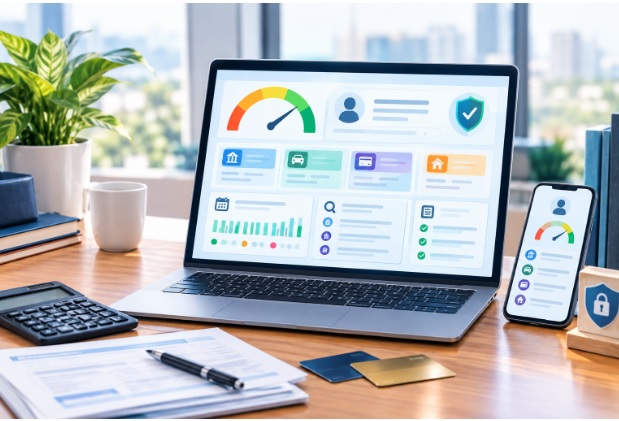
A credit report is a detailed record of an individual’s borrowing and repayment history. It contains information about loans, credit cards, payment behaviour, outstanding balances and credit enquiries. Lenders use this information along with other financial details when assessing applications for credit.
Learning how to review the information in a report can help borrowers identify errors, monitor existing accounts and understand the factors influencing their credit profile.
What Is a Credit Report?
A credit report is compiled from information supplied by banks, financial institutions and other authorised credit providers to credit information companies. A CIBIL report, for example, contains information relating to credit accounts, payment history, enquiries and personal details.
The report is different from a credit score. A credit score is a three-digit numerical summary of credit history, while the report contains the underlying information used to assess credit behaviour.
Main Sections of a Credit Report
A typical CIBIL report contains several important sections.
Personal Information: This can include details such as name, date of birth and identification information.
Account Information: This section contains details of loans and credit cards, including account status, outstanding amounts and repayment information.
Payment History: It records repayment behaviour and can show whether payments were made on time or were delayed.
Credit Enquiries: This section records enquiries made by lenders when applications for loans or credit cards are submitted. CIBIL states that its report includes lender enquiries for the previous 36 months.
Credit Score: The CIBIL Score ranges from 300 to 900 and summarises information from the accounts and enquiry sections of the report.
How to Read CIBIL Report Correctly
If you want to understand how to read cibil report, begin by checking your personal information. Errors in your name, address or other identifying details should be reviewed carefully because incorrect information can complicate the identification of accounts.
Next, examine every loan and credit card listed under the accounts section. Make sure the accounts actually belong to you and check whether their status is shown correctly.
The payment history deserves particular attention. Look for delayed payments, overdue amounts or other entries that do not match your records.
Check Credit Report for Errors
It is important to check credit report information regularly because errors can affect the way lenders view your credit profile. Unrecognised accounts may also indicate potential identity theft or fraudulent borrowing.
If you find an incorrect entry, first contact the concerned lender and request verification. If the information is not corrected, you can raise a dispute with the relevant credit bureau.
TransUnion CIBIL states that checking your own report does not negatively affect your score because it is considered a soft enquiry.
Understanding Credit Enquiries
When you apply for a loan or credit card, a lender may make a credit enquiry. Multiple recent applications can result in several enquiries appearing in the report.
CIBIL identifies enquiries as one of the factors considered in calculating the CIBIL Score. Payment history, credit utilisation and the age of credit are also important factors.
Therefore, reviewing the enquiry section can help borrowers understand how frequently their credit profile has been accessed by lenders.
Why You Should Check Credit Report Regularly
A regular check credit report routine can help borrowers identify inaccurate information, monitor outstanding accounts and detect unfamiliar credit activity. It can also help consumers understand their repayment behaviour before applying for a new loan.
The Reserve Bank of India has directed credit information companies to provide individuals with access to one free full credit report in a calendar year, subject to authentication and applicable conditions.
How Bajaj Markets Can Help With Credit Awareness
Bajaj Markets offers financial resources related to CIBIL scores, credit reports and responsible credit management. These resources can help users understand credit terminology and the information commonly included in a report.
When learning how to read cibil report, focus on account details, repayment history, enquiries, outstanding balances and personal information. If anything appears incorrect, retain supporting documents and approach the relevant lender or credit bureau for correction.
Regularly taking time to check credit report information can help borrowers stay aware of their credit history and identify issues early, rather than discovering them only when applying for a loan or credit card.